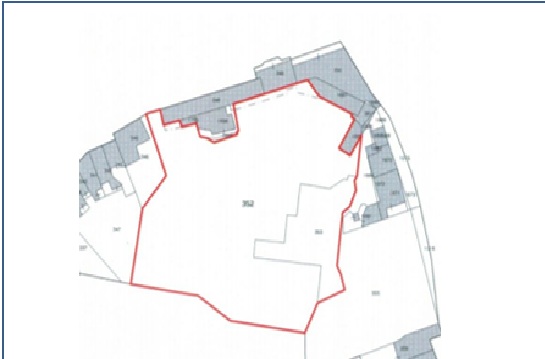
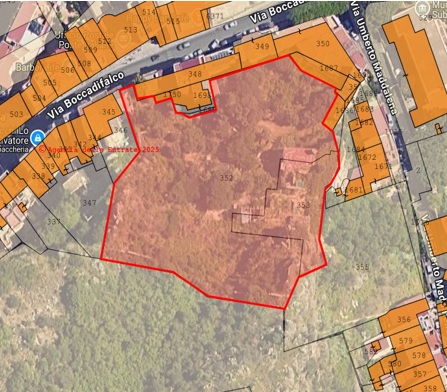
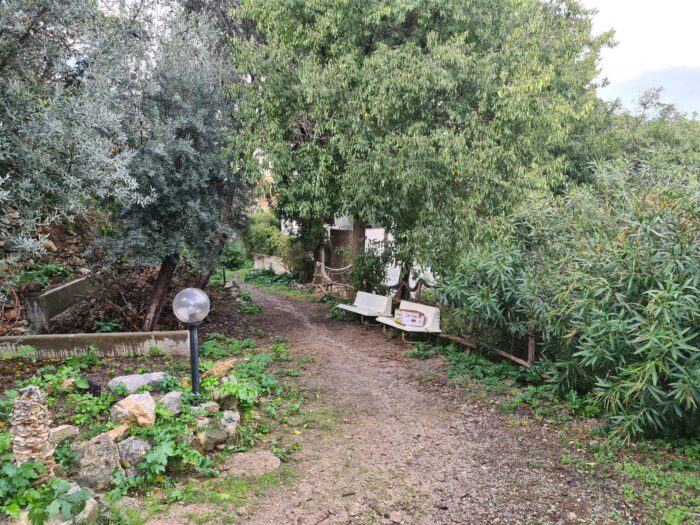
The compound, located in a suburban area southwest of Palermo, at the foot of Monte Cuccio and within the Bourbon Reserve of Boccadifalco, comprises a vegetated plot of land with walking paths and the ruins of an ancient, condemned rural building. Acquired by the Bourbon royal family between 1799 and 1802, the property was intended for new suburban residences for agricultural, livestock, and recreational purposes, in a charming historical and natural setting, characterized by tranquillity and a fair state of preservation.





 via Boccadifalco (in prossimità di piazza Pietro Micca), 28 - 90136 Palermo (PA)
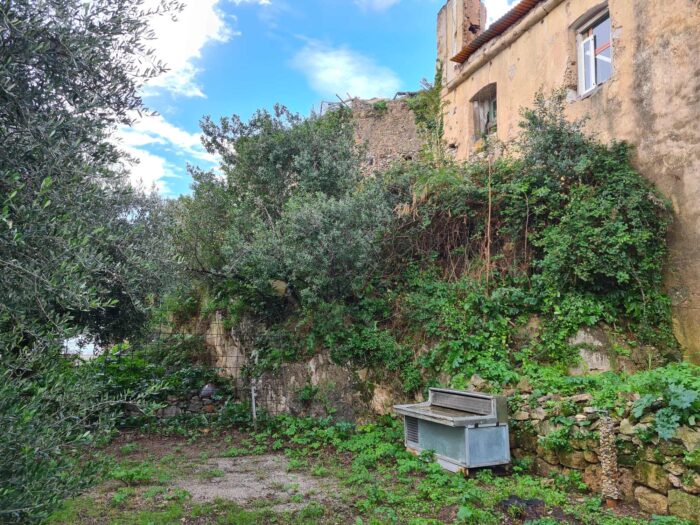
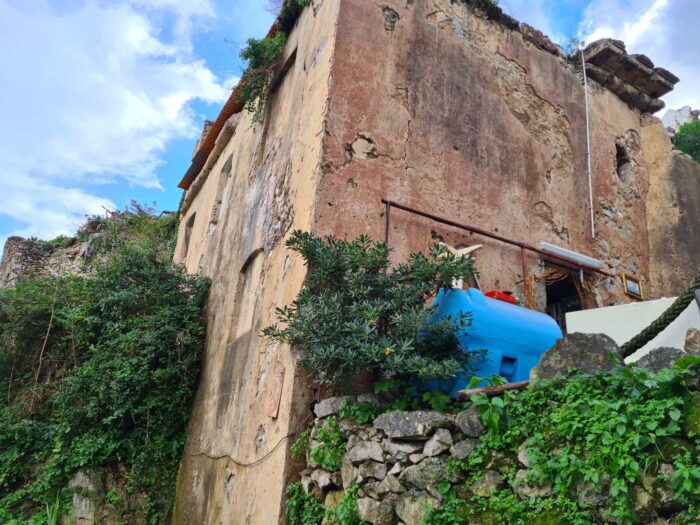
 The building, dating back to the Bourbon era and originally intended for rest during hunting expeditions, has an L-shaped plan and multiple floors. Today, it is reduced to a few wall facings and a two-storey structure with a temporary roof, in an overall poor state of repair. Parcel no. 352 on sheet 141 falls partly within the E2 homogeneous territorial zone and partly, with a smaller portion, within the Areas Restricted to Building and/or Urban Use; parcel no. 353 on sheet 141 falls mostly within the homogeneous zone and, with a smaller portion, within the A2 homogeneous territorial zone.
Since this property belongs to the State Historic and Artistic Property, with note no. 2025/20290 of November 27, 2025, currently under evaluation, an authorization request has been submitted to the Regional body responsible for protection pursuant to art. 57-bis of Legislative Decree 42/2004 for the purpose of granting temporary use. Signing of the concession deed is subject to the required authorization. Planned activities: socio-cultural activities (events, artistic production, concerts, exhibition spaces, etc.) and related ancillary services, territorial promotion activities (sustainable tourism, discovery of the territory, etc.), with a view to public use of the property and urban regeneration.
The property is located in Palermo, in the locality Boccadifalco, a peripheral area southwest of the city, at the foot of Monte Cuccio and within the Bourbon Reserve. The property comprises a 5,117 sqm lot, accessible from Via Boccadifalco 28, near Piazza Pietro Micca, and extends over terraced, partially steeply sloping land. It includes pedestrian paths, a water collection tank on the northwest side, and the ruins of a brick rural building along the eastern side on Via Umberto Maddalena. The ancient structures testify to the land’s historical productive use; redevelopment, primarily for public use, represents the primary solution to preserving its value and preventing its deterioration.
The compound, located in a suburban area southwest of Palermo, at the foot of Monte Cuccio and within the Bourbon Reserve of Boccadifalco, comprises a vegetated plot of land with walking paths and the ruins of an ancient, condemned rural building. Acquired by the Bourbon royal family between 1799 and 1802, the property was intended for new suburban residences for agricultural, livestock, and recreational purposes, in a charming historical and natural setting, characterized by tranquillity and a fair state of preservation.
via Boccadifalco (in prossimità di piazza Pietro Micca), 28 - 90136 Palermo (PA)