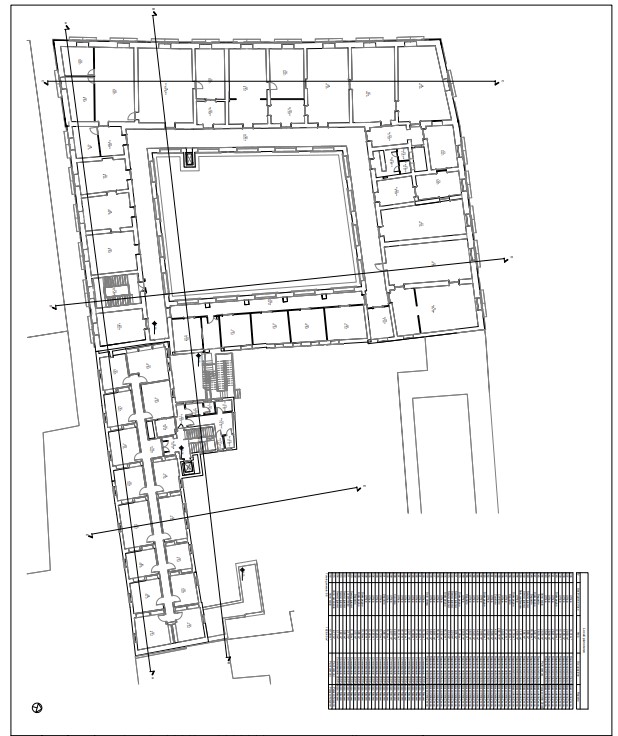
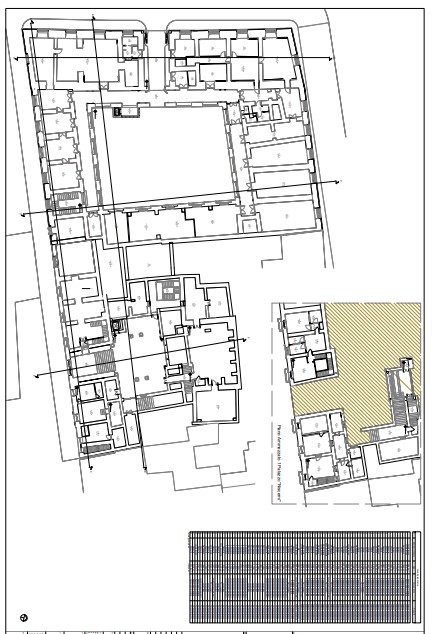
Palazzo della Zecca (mint), located in the heart of Palermo's historic city centre between Piazza Marina, Salita dell'Intendenza, and Vicolo Niscemi, is an imposing 17th-century building featuring a quadrangular plan with an internal courtyard and loggia. Historic cultural asset, today housing public offices, it stands out for its strategic position, its connection with Palazzo Niscemi, and its strong architectural-identity value in the urban context.



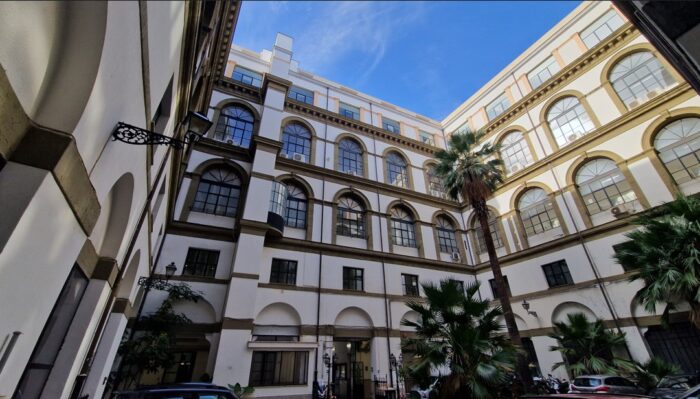


 Piazza Marina, Salita Intendenza, 2 - 90133 Palermo (PA)
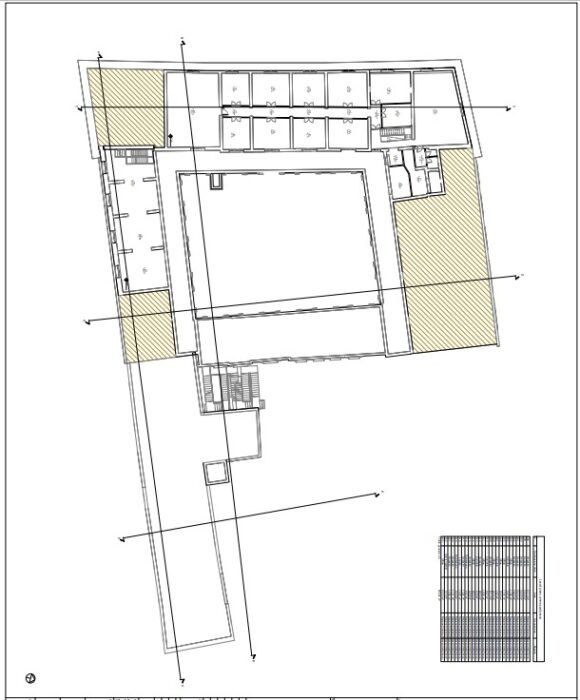
 The property is currently occupied by State Administrations, which hold it for government use. Only certain spaces located on the ground floor, as well as the areas on the top floor and the possible roof garden, may be made granted to private individuals within the framework of a Public-Private Partnership (PPP).
The complex comprises Palazzo della Zecca (mint) and Palazzo Niscemi, two contiguous historic buildings situated in the heart of Palermo’s historic centre, within the Tribunali–Kalsa district. Palazzo della Zecca, built in 1699, develops on six above-ground levels with load-bearing masonry structure and an internal courtyard, while Palazzo Niscemi, originally built before 1700, has five above-ground floors and a mezzanine level. Both properties are detached buildings and have been subject to layered architectural transformations over the centuries, which characterize their morphology and the system of vertical connections.
The current use is predominantly tertiary and office-related, and the properties are entirely occupied by State Administrations that hold them for government use. The complex falls within the scope of the Historic Centre Detailed Executive Plan (PPE), under which Palazzo della Zecca is classified among the Public Civil Specialized Buildings and Palazzo Niscemi as a Historic Palace, with permitted interventions including restoration, refurbishment, and compatible renovation.
With a view to enhancing the asset’s value, some spaces on the ground-floor, the top-floor areas, and the possible roof garden can be designated for cultural, recreational, or public-use activities, also through public-private partnership operations aimed at opening the complex to the city.
The complex is situated in the historic city centre of Palermo, within the Tribunali–Kalsa district, in an urban area of significant historical and monumental value. The buildings overlook Piazza Marina and are located near important places of interest such as Palazzo Chiaramonte-Steri, Palazzo Abatellis, Palazzo Butera, the Gallery of Modern Art, and the Foro Italico.
The area is served by a dense urban road network with links to Via Vittorio Emanuele, Via Lincoln, and the Cala port. Local public transport stops are available nearby, with connections to Palermo Central Station, located a short distance away. The context is characterised by mixed cultural, administrative, and residential functions, with high pedestrian accessibility.
Palazzo della Zecca (mint), located in the heart of Palermo's historic city centre between Piazza Marina, Salita dell'Intendenza, and Vicolo Niscemi, is an imposing 17th-century building featuring a quadrangular plan with an internal courtyard and loggia. Historic cultural asset, today housing public offices, it stands out for its strategic position, its connection with Palazzo Niscemi, and its strong architectural-identity value in the urban context.
This property is part of the project:
Piazza Marina, Salita Intendenza, 2 - 90133 Palermo (PA)